
Let me expand on this in a practical, consultative way.
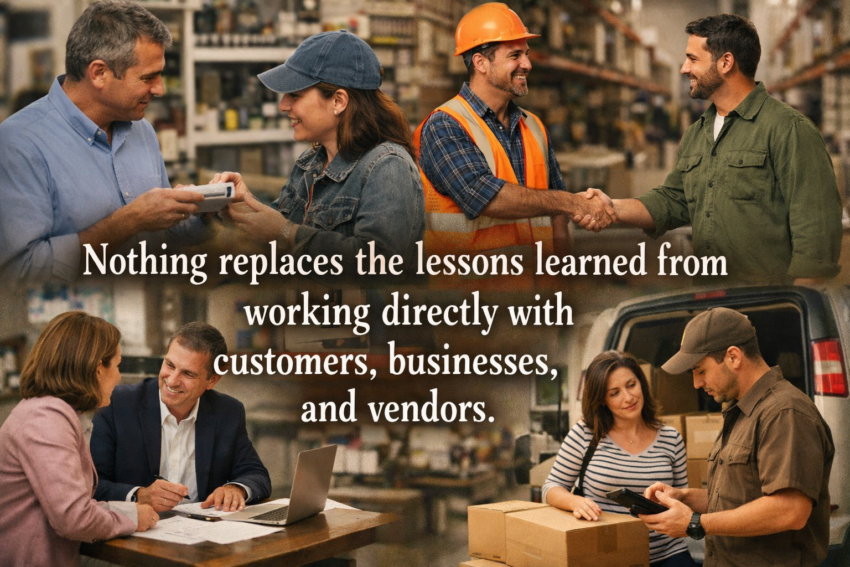
In retail, there is simply no replacement for what you learn by working directly with customers, businesses, and vendors. Research gives you direction. Data gives you patterns. Strategy gives you structure. But real interaction gives you context and context is what sharpens judgment.
When you spend consistent time with customers, you begin to see beyond transactions. You notice behavior. You hear recurring questions. You observe hesitation, enthusiasm, confusion, loyalty. You start to understand decision-making in real time, what influences it, what slows it down, what builds confidence. That kind of insight doesn’t just inform marketing; it shapes product selection, pricing strategy, service design, and brand voice.
Working closely with businesses adds another layer. You see how operational decisions are made. You understand competing priorities, risk tolerance, cash flow considerations, and timing pressures. Collaboration stops being abstract and becomes practical. You learn where alignment exists and where it needs to be built.
Engaging directly with vendors deepens that perspective even further. You gain awareness of supply realities, production timelines, negotiation dynamics, and cost structures. You begin to appreciate the full ecosystem behind a product, not just what appears on the shelf.
All of this feeds into retail storytelling.
Retail storytelling, at its core, is not about creating a polished narrative detached from reality. It’s about translating lived experience into meaningful communication. When your insights come from direct engagement, your story carries depth. It reflects understanding of people, of process, of partnership.
→ From a strategic standpoint, proximity reduces guesswork.
→ Conversation reduces assumptions.
→ Exposure builds informed confidence.
When you’re close to the day-to-day realities of retail, your messaging becomes clearer because it’s grounded. Your positioning becomes stronger because it’s informed. Your brand voice becomes more natural because it reflects what you’ve actually observed and navigated.
For your website and overall presence, this matters. Retail storytelling should communicate that you understand the environment because you’ve worked within it; listening, adjusting, collaborating. It should feel practical, thoughtful, and connected to real-world experience.
In the end, strategy is most effective when it’s informed by direct exposure. The closer you are to the people and processes involved, the more precise your decisions become. And when storytelling grows out of that proximity, it builds credibility not because it sounds impressive, but because it resonates as real.