
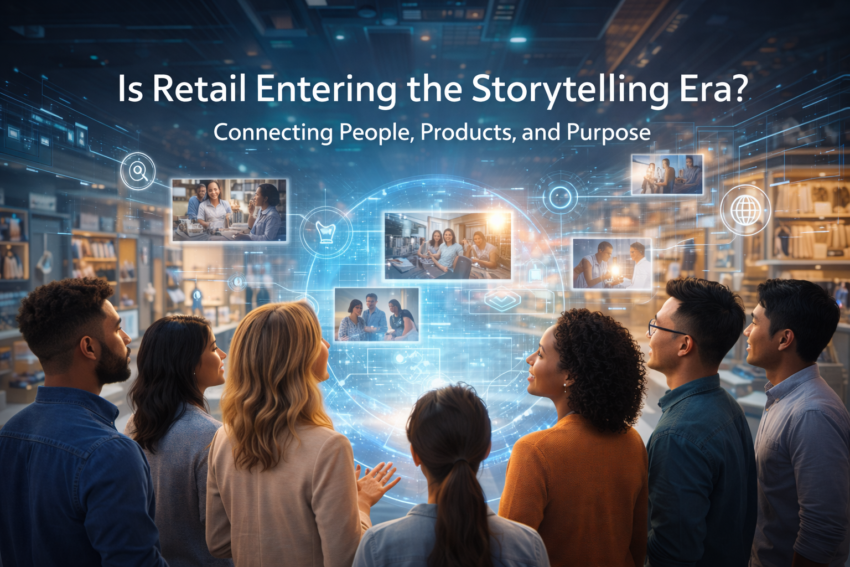
Retail storytelling is not a trend or a marketing buzzword. It is a return to something that has always existed at the heart of commerce: human connection. When retailers focus on purpose, experience, and authenticity, they move beyond simply selling products. They begin creating environments where people feel understood, inspired, and engaged. That is where the real power of retail lies. In a world filled with endless choices and constant noise, the brands that stand out will be the ones that tell meaningful stories. Because at its core, retail has never just been about products. It has always been about people.
1. Connecting People, Products, and Purpose
Retail storytelling is the art of turning ordinary transactions into meaningful human experiences. When retailers connect purpose, products, and people through narrative, they create something far more powerful than a sale, they create relationships.
Retail has always been about more than simply exchanging money for goods. Long before digital carts, automated recommendations, or advanced analytics, commerce was built on something much more human: relationships. Merchants understood their customers, shared stories about their products, and created experiences that made people want to return. In many ways, retail began as storytelling. A shopkeeper might explain where a product came from, how it was made, or why it mattered. Those conversations were not just about selling something. They were about building trust. Customers left with more than an item in their hands; they left with a sense of connection to the place and the people behind it. Today, retail has evolved dramatically. Technology has transformed how we discover, evaluate, and purchase products. Yet despite all this change, the most successful retailers continue to rely on the same powerful idea that has existed for centuries: stories create meaning. Retail storytelling is the practice of connecting people, products, and purpose in a way that transforms transactions into relationships.
2. Why Retail Storytelling Matters More Than Ever
Modern consumers are surrounded by choice. In almost every category, there are countless products competing for attention. Digital marketplaces, social media, and global supply chains have created an environment where nearly anything can be purchased quickly and easily. In a world like this, convenience alone is no longer enough to stand out. Customers today are not just comparing prices or features. They are evaluating values, identity, and authenticity. They want to understand the businesses they support and the intentions behind the products they buy. Retail storytelling provides that context. A well-crafted story explains why a product exists, what problem it solves, and what values shaped its creation. When customers understand the narrative behind a brand, they begin to see the product differently. It becomes more than an object; it becomes part of a story they can relate to. Storytelling turns a simple purchase into a meaningful experience.
3. The Human Side of Buying
Every purchase decision contains both rational and emotional elements. While consumers may justify their decisions logically, emotion often plays the leading role in shaping them. Retail storytelling speaks directly to that emotional side. A compelling narrative allows customers to imagine how a product fits into their lives. It can evoke memories, aspirations, or personal values. When a retailer communicates its story effectively, customers begin thinking beyond the product itself and start considering what that product represents. It may represent craftsmanship. It may represent innovation. It may represent quality, sustainability, or community. Whatever the message may be, the story gives the product meaning beyond its functional purpose. And meaning creates connection.
4. From Transaction to Experience
One of the most powerful outcomes of retail storytelling is its ability to transform the shopping experience. When retailers focus only on transactions, stores become places where products are displayed and purchased as efficiently as possible. The environment becomes functional but sometimes forgettable. Storytelling changes that dynamic. Retail spaces become environments where narratives come to life. Every design choice, display, and interaction contributes to how that story is experienced. Lighting, layout, materials, and presentation can subtly communicate a brand’s identity. The tone of customer interactions can reinforce the brand’s personality. When these elements work together, the store becomes immersive rather than transactional. Customers are no longer simply shopping. They are participating in the story.
5. Differentiation in a Crowded Marketplace
Competition in retail has never been greater. Products across many categories can appear similar, perform similarly, and often carry comparable price points. Retail storytelling creates differentiation that competitors cannot easily replicate. A brand’s story reflects its perspective, its history, and its values. It communicates not only what the business sells but why it exists in the first place. When retailers focus on this narrative, they begin attracting customers who share similar values and aspirations. The relationship becomes deeper than a typical buyer-seller interaction. Storytelling does not simply help retailers sell more products. It helps them build stronger relationships with the right customers.
6. Authenticity: The Foundation of Retail Storytelling
For storytelling to work, it must be authentic. Consumers today quickly recognize when a brand’s message feels artificial or disconnected from reality. When values are claimed but not demonstrated through actions, credibility disappears. Authentic retail storytelling begins with honesty. Retailers should communicate real motivations, real challenges, and genuine commitments. Stories about craftsmanship, innovation, or community impact become powerful when they reflect actual effort rather than marketing language. Consistency is equally important. The story presented through advertising, websites, and social media should align with what customers experience in stores and customer service interactions. When those elements match, trust grows naturally. And trust is one of the most valuable assets a retailer can earn.
7. Storytelling Across Every Retail Touchpoint
Retail storytelling does not exist in a single campaign. It unfolds across every interaction between a customer and a brand. A website may introduce the company’s philosophy and origins. Product descriptions can reveal the inspiration and thought process behind design. Retail environments can reinforce the narrative through atmosphere and presentation. Customer service can reflect the personality and values of the brand. Even packaging can communicate care, creativity, and attention to detail. When these elements align, the story becomes cohesive and memorable. Customers encounter the same narrative repeatedly, and the brand’s identity becomes clear.
8. Technology and the New Era of Retail Storytelling
Technology has expanded the ways retailers can communicate their stories. Digital platforms allow brands to present narratives through video, imagery, and interactive experiences that reach audiences worldwide. New technologies also create opportunities for deeper engagement. Interactive displays, immersive online experiences, and personalized recommendations can help customers explore a brand’s story in more meaningful ways. However, technology works best when it supports human connection rather than replacing it. Retail storytelling should remain rooted in human experience. Innovation simply provides new stages where those stories can unfold.
9. Building Community Through Story
When customers connect with a brand’s story, they often become advocates for it. People naturally share experiences that resonate with them. A meaningful purchase, a memorable store visit, or a brand that reflects personal values can inspire conversations with friends, family, and communities. Over time, these conversations create something larger than a customer base. They create a community. Members of that community feel invested in the brand’s journey. They follow its growth and celebrate its progress. In return, the brand gains something invaluable: genuine loyalty. Community built through storytelling is far stronger than loyalty built through promotions alone.
10. Retail Is an Ongoing Story
Retail storytelling is not a one-time marketing activity. It is an ongoing narrative that evolves with every decision a business makes. Product launches, store experiences, customer interactions, and innovations all become chapters in the story. Retailers who understand this approach storytelling differently. They recognize that every interaction shapes how customers perceive the brand. Each moment contributes to the narrative. Over time, those moments create something powerful: a story customers want to return to again and again.